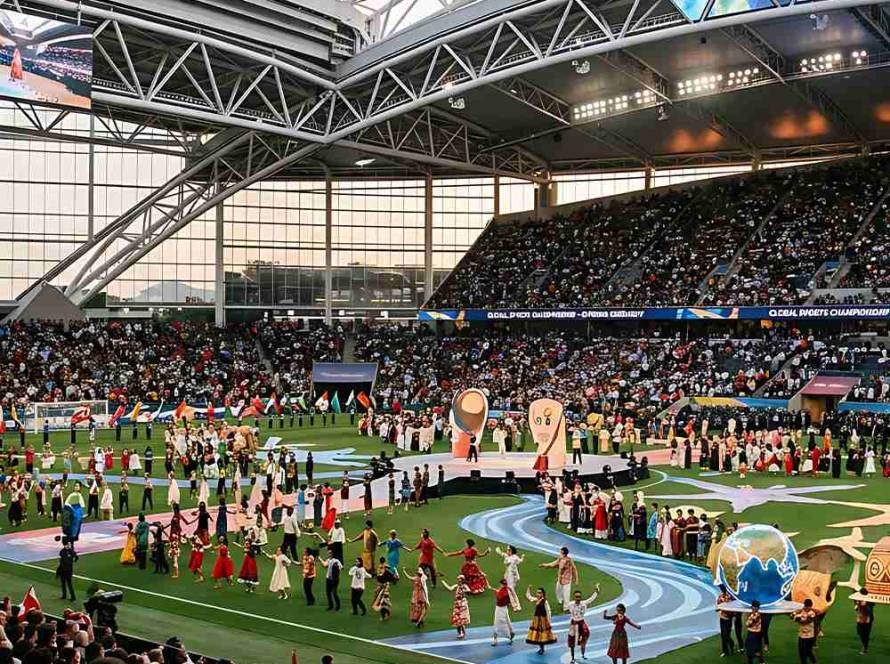


Venue naming rights sponsorship is a long-term agreement in which a company pays the owner or operator of a venue for the exclusive right to put its name on it. The venue could be an arena, stadium, convention centre, community rec centre or a park pavilion. In return, the sponsor’s name becomes the everyday name of the place: on the building, in directions, on tickets and in broadcasts. You may also see it called naming rights sponsorships or title sponsorship. The terms overlap heavily, and we use them together in this guide. Below we explain what a deal includes, how it moves from first conversation to signed contract, how long it lasts, and where it goes wrong.
What Venue Naming Rights Sponsorship Means
A naming rights agreement is, in the words of Lavery LLP, a contract between a company and the owner or operator of a venue, building, event or facility. The company gets the exclusive right to name it by paying a fee or providing other benefits. The venue gets money that supports operations or improves its finances, and the sponsor gets its brand tied to a place people visit and talk about for years.
What separates this from regular sponsorship is length and depth. Lavery points out that ordinary sponsorship deals usually run three to five years, while naming rights agreements often run five to twenty years, sometimes more. The sponsor is not renting a banner for a season. Its name becomes part of the venue’s identity. That is also why the category is so common at the top end of sport. Lavery notes that over 90% of teams in North America’s five largest professional leagues have signed a naming rights deal.
Naming Rights vs. Title Sponsorship
Some sources draw a line between the two. They say naming rights attach to a permanent asset such as an arena, while title sponsorship puts a brand’s name in the title of an event, like “Brand X Winter Classic.” In day-to-day sales work, both mean the same thing for the sponsor: one brand holds the name, and nobody else can. We cover them together because the way you value, package, negotiate and manage them is largely the same.
What a Sponsor Actually Gets
Naming a building is only the start. A strong deal usually bundles several rights, and the contract spells each one out:
- The name itself, used on the exterior, entrances and wayfinding signage
- Digital and broadcast presence, including mentions during televised events, screen graphics and the venue’s website and social channels
- Category exclusivity, meaning no direct competitor can be a sponsor at the venue
- Hospitality, such as suites, tickets and branded event space
- Marketing and activation rights, like on-site promotions, sampling and the use of the venue’s marks in campaigns
The Innovative Partnerships Group describes the best naming rights deals as strategic platforms rather than logo placement, with ongoing visibility, credibility and business value over time.
How Venue Naming Rights Deals Work, Step by Step
Every deal is different, but most follow the same path.
1. The venue checks whether it is ready
A venue is a good candidate when it has a defined brand identity, a measurable audience and long-term relevance in its market. A formal valuation then sets a realistic price range.
2. The venue lists what it can sell
This covers signage, digital screens, media mentions, hospitality, exclusivity categories and any activation space. Each item is described and valued, since this inventory is what the sponsor is really buying.
3. The venue builds a target list
The best-fit brands share an audience with the venue and want to be tied to the community around it. Lavery’s examples make the point: IGA, which cares about healthy eating, sponsors a tennis stadium, and CN, a Montreal-based company, sponsors the Canadiens’ training complex.
4. Both sides pitch, negotiate and agree on terms
Price, length, payment schedule, rights and exit conditions are all on the table. Decisions at this level usually involve senior executives, so the process takes months, not weeks.
5. The agreement is signed and the rebrand begins
The venue updates signage, websites, ticketing and wayfinding. The exact naming convention, meaning the full name, short form and permitted abbreviations, should already be settled in the contract.
6. The sponsor activates
Signage is only the foundation. The brand’s marketing team builds campaigns, events, promotions and hospitality programs around the name.
7. Both sides measure and review
Regular reports on delivered visibility and results keep the deal on track and shape the renewal conversation.
How Long Do Deals Last, and How Are They Paid?
Term length varies with the size of the venue. For major stadiums and arenas, one US law firm puts typical agreements at 10 to 30 years, with shorter terms for events. Smaller venues and local facilities often sign shorter terms, which gives both sides a chance to reset the price as the venue grows.
On the money side, annual payments have largely replaced fully prepaid deals. Common features include:
- Inflation or escalator clauses so the value holds up over a long term
- Minimum payment guarantees that protect the venue if the sponsor leaves early
- Performance bonuses tied to attendance or broadcast reach
- Renewal options, often a first-look right for the current sponsor
For scale, the top end of the market is very large. Scotiabank reportedly pays about $40 million a year for 20 years for Toronto’s Scotiabank Arena, and Crypto.com agreed to roughly $50 million a year for 20 years for the arena in Los Angeles. These are headline deals for major-league buildings. A community arena or convention centre prices very differently, based on attendance, media exposure, local market size and term, which is why a proper valuation matters.
Examples From Canada and Beyond
- Scotiabank Arena, Toronto. Formerly the Air Canada Centre, renamed in 2017 under the deal mentioned above.
- CN Sports Complex, Montreal. In 2023 the Canadiens’ training centre moved from Bell to CN as its naming partner.
- IGA Stadium, Montreal. Renamed from Uniprix Stadium in 2018 when IGA became the naming sponsor of the national tennis tournament venue.
- Heinz Field, Pittsburgh. For over 20 years the Steelers’ home carried the name of a company founded in the city. When the deal expired and the stadium became Acrisure Stadium, fans missed the giant ketchup bottles so much that one was put back outside a gate. The lesson: local roots and a good story can make a name stick.
What Goes Into the Contract
The agreement is where most of the value, and most of the risk, is decided. Shepard Mullin’s 2026 guidance for venue and sponsor lawyers highlights several areas worth getting right:
- Define the venue precisely. State whether the name covers only the main building or also adjacent areas and spaces controlled by third parties.
- Treat signage and digital visibility as real deliverables. Specify placement, size, lighting, maintenance and protection from obstruction during broadcasts.
- Draft exclusivity carefully. Product categories need clear definitions that allow for new business lines and carve-outs for leagues, teams and existing sponsors.
- Document trademark use. Say who owns any new venue-name mark, how it may be used, and what happens when the deal ends. Lavery adds that the sponsor must not walk away with permanent rights to the venue’s brand.
- Don’t assume team marks or player images are included. These usually need separate licences.
- List excluded events and any rights held by third parties.
- Plan for disruption. Set objective triggers for credits, fee changes or termination if something like a lockout, relocation or reputational problem occurs.
- Build in reporting and audit rights so disputes get resolved quickly.
If you want a working checklist, our naming rights sponsorship checklist walks through each clause in a deal.
Risks to Plan For
Long deals carry long risks, and the same sources point to the same ones.
A weak brand fit. When the Chicago White Sox stadium became Guaranteed Rate Field in 2016, Lavery notes that the public ridiculed the change because the sponsor was a local company that few fans knew.
A sponsor in trouble. A bankruptcy or scandal can turn a naming deal into a public relations problem fast. Enron Field became Minute Maid Park in 2002, and FTX Arena was renamed Kaseya Center in 2022 after the exchange collapsed. This is why contracts include termination rights and conduct clauses that spell out exactly what triggers them.
Public pushback. Fans can resist when a place with a long history is renamed. Lavery notes that a proposal to sell naming rights to Toronto transit stations drew immediate criticism.
Extra approvals for public venues. Taxpayer-funded venues often need municipal or council sign-off and may face disclosure requirements. For civic buildings, plan time for that process and be ready to explain what the community gains.
Is Your Venue Ready for a Naming Rights Deal?
Ask three questions. Do you have a clear identity that people recognize? Can you show who visits and how often? Will the venue still matter to the community in ten or twenty years? If the answer to all three is yes, the next step is a valuation and an honest look at what your inventory is worth. For venues, the money often goes to practical needs: facility operations, capital reinvestment and community programs. Being specific about this in your pitch helps. Sponsors want to know their payment improves something people can see.
Working With a Specialist
Selling naming rights is not like selling a typical sponsorship package. The deals are bigger, the contracts are longer, and the buyers are senior executives who see many proposals. A sponsorship sales agency can handle valuation, packaging, brand outreach and negotiation, while you stay focused on running the venue. Our title sponsorship and naming rights services cover arenas, convention centres and civic facilities, and our work on venue naming rights is built around matching the right brand with the right venue at the right stage of its growth.
Frequently Asked Questions
What is venue naming rights sponsorship?
It is a long-term agreement where a company pays the owner of a venue for the exclusive right to name it, along with related marketing and visibility benefits.
What is title sponsorship?
Title sponsorship gives one brand the lead name on a property, whether that’s a venue or an event. It works like naming rights: one sponsor holds the name, and exclusivity is the main selling point.
How much do naming rights sponsorships cost?
It depends on attendance, media reach, market size and term. Top arenas reportedly reach tens of millions per year, while community venues are far lower. A formal valuation sets the right number.
How long do naming rights deals last?
Often 10 years or more for major venues and shorter for smaller venues or events. Regular sponsorships usually run three to five years.
Can a naming rights deal be cancelled?
Yes, if the contract allows it. Most agreements include termination clauses for breach and conduct provisions for scandals, so spell out the triggers clearly.
Talk to Us About Naming Rights
If you manage a venue or represent a brand looking at a naming rights deal, WW Sponsorship, an event sponsorship agency in Canada, offers a free 30-minute consultation.