

Sport event sponsorship has moved from a marketing nice-to-have to one of the most competitive line items in a brand’s budget. Independent research firms peg the global sports sponsorship market anywhere from roughly $70 billion to more than $120 billion in 2026, depending on how each report defines the category, and most agree it is expanding at a compound annual growth rate between 6% and 9% through the early 2030s. Whichever number you use, the direction is the same: more brands are chasing fewer premium sponsorship slots, and rights holders who understand how to package and pitch those slots are the ones winning long-term partners.
This guide breaks down why the market is growing so quickly, what brands actually get out of sports event sponsorship deals, and how teams, leagues, and event organizers can position themselves to land sponsors instead of chasing them.
How Big Is the Sports Sponsorship Market Right Now?
Market sizing varies by research house because “sports sponsorship” gets defined differently across studies. Some limit it to signage and naming rights, others fold in digital activation, hospitality, and athlete endorsement spend. Straits Research puts the market at roughly $71.8 billion in 2026, climbing to $145 billion by 2034 at a 9.2% CAGR. Fortune Business Insights estimates a broader figure of nearly $100 billion in 2026, projecting growth past $180 billion by 2034. The Business Research Company and Research and Markets both size the market closer to $74.6 billion in 2026, growing to roughly $96.5 billion by 2030.
The spread between estimates matters less than the pattern underneath it. Every major report points to the same drivers: digital and streaming integration, athlete and creator partnerships, data-driven measurement, and expansion into women’s sports, esports, and grassroots leagues. North America consistently holds the largest regional share, while Asia-Pacific is flagged as the fastest-growing region as sponsorship budgets follow audience growth in new markets.
Why the Market Is Growing So Fast
A few forces are compounding at once, which is why growth has held steady rather than plateauing:
Streaming has multiplied the inventory: Sponsorship used to mean a jersey patch or a stadium banner. Now it includes pre-roll on a streamed match, branded highlight packages, second-screen graphics, and integrations inside league apps. Every new distribution channel creates a new sponsorship slot to sell.
Fan trust in sponsors is high: Multiple industry surveys report that a large majority of sports fans trust brands that sponsor the teams or events they follow more than they trust generic advertising. That trust translates directly into purchase intent, which is exactly what a sponsorship sales conversation needs to prove to a prospective partner.
Measurement has caught up: Sponsors used to buy sports exposure on faith. Now they can track media value, social impressions, foot traffic lift, and sales attribution tied to a specific activation. Better data means bigger budgets, because finance teams can finally justify the spend the way they justify a paid media line item.
Women’s sports and grassroots leagues have opened new inventory: Sponsorship dollars that once concentrated in a handful of major leagues are now spreading into women’s leagues, youth sports, and regional events, largely because audience growth there has outpaced legacy properties and the sponsorship rates are still comparatively efficient.
Athlete personal branding has become its own channel: Name, image, and likeness deals and individual athlete partnerships now run alongside traditional team and event sponsorship, giving brands more entry points at more price levels, including micro-sponsorships that a mid-size company can actually afford.
Why Businesses Sponsor Sporting Events
The case for sponsorship holds up because it delivers on several fronts that a single advertising channel rarely can.
Brand awareness at scale: A sponsorship puts a logo, tagline, or product in front of an audience that is already emotionally engaged, whether that is fans in a stadium, viewers on a stream, or a local community at a grassroots tournament.
Direct access to a highly desirable audience: Sports audiences skew toward high engagement and, in many categories, high disposable income. A sponsorship deal gives a brand a shortcut into that audience’s attention without competing against every other ad on their feed.
Sales lift, not just impressions: Concession partnerships, on-site retail, sampling booths, and athlete-driven product mentions all create a direct line from sponsorship to revenue, which is why more sponsorship proposals now lead with projected sales impact rather than just reach numbers.
Market entry and expansion: A regional or local sponsorship is one of the fastest ways for a brand to announce itself in a new territory, because it borrows the credibility and following the sports property already has. This is especially relevant for brands expanding across the Canada-US border, where a sponsorship with a well-known regional team or event can build local trust faster than a cold advertising push.
Content and social proof: Athletes and teams generate content brands cannot easily produce on their own: game-day footage, behind-the-scenes access, and authentic endorsements that read as credible rather than paid.
Benefits of Sponsoring a Sports Team Specifically
Team sponsorship deserves its own mention because it behaves differently than event sponsorship. A team relationship is ongoing rather than a single moment, which means the brand gets repeated exposure across a full season, deeper community ties in the team’s home market, and more opportunities for co-branded content over time. For local and regional businesses in particular, sponsoring a team is often more cost-effective than sponsoring a one-off event, because the relationship compounds: fans see the brand at every game, in every newsletter, and across every social post the team publishes. Naming rights and title-level placements take this a step further, giving a single sponsor top billing across every touchpoint the team or venue owns.
How to Get Sponsors for a Sports Team or Event
Rights holders spend a lot of energy chasing sponsors when the more reliable path is building something sponsors want to find. A few principles consistently separate teams and events that land sponsors from those that struggle.
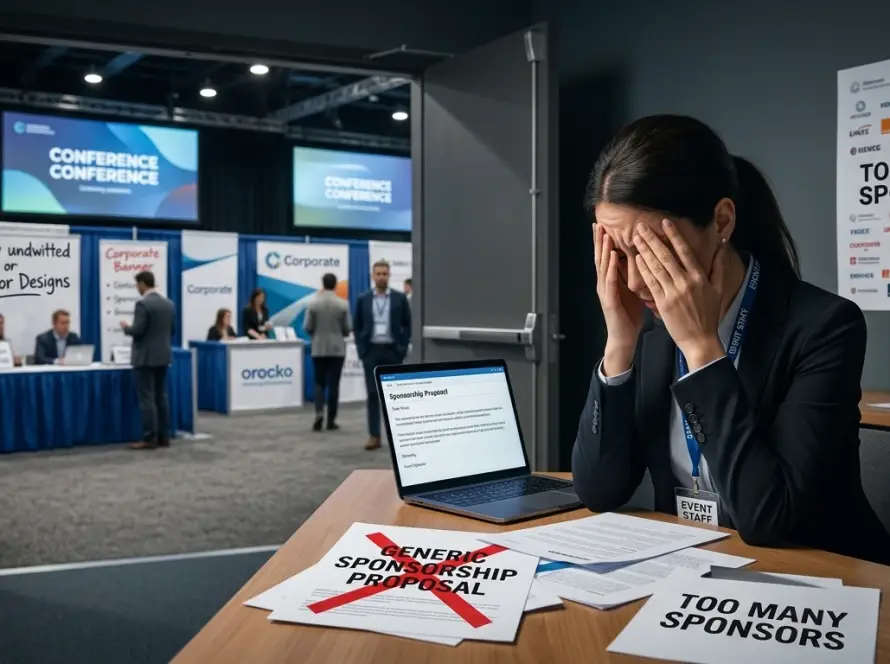
Package data, not just logo space: Sponsors are increasingly buying outcomes: audience demographics, engagement rates, past activation results, and projected reach across every channel the property touches, not just the venue. A one-page media kit with real numbers outperforms a glossy deck with vague promises.
Segment your sponsorship tiers: Not every sponsor can afford a title partnership, and not every prospect wants one. Offering tiered sponsorship packages, from a small local business signage buy to a full presenting sponsorship, widens the pool of businesses who can say yes.
Lead with the audience, not the team: Sponsors care less about a team’s win record and more about who is in the stands, who is watching the stream, and whether that audience matches their customer profile. Framing outreach around audience fit closes more deals than framing it around team performance.
Make the task specific: “Support our team” rarely converts. “A $2,500 sponsorship puts your logo on our jerseys for 20 games in front of an average of 400 fans per game, plus three dedicated social posts” gives a prospect something concrete to evaluate against their budget.
Follow up with proof, not just requests: After a sponsorship runs, sending a short recap with photos, impression estimates, and any measurable results makes renewal conversations far easier than starting from scratch each season.
Sports Sponsorship Trends Worth Watching in 2026
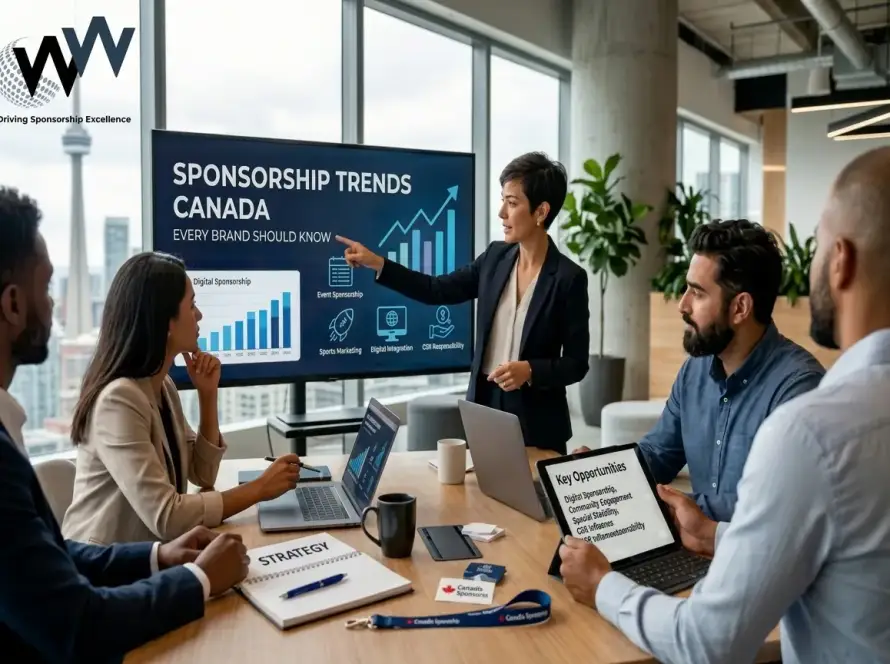
Heading into the rest of 2026, three shifts stand out. First, major global events including the FIFA World Cup and Winter Olympics are pulling sponsorship budgets forward across the calendar, which is lifting activity even in adjacent, non-Olympic sports. Second, AI-driven measurement tools are making it easier for smaller rights holders to produce the kind of sponsorship performance reporting that used to require an enterprise analytics team, leveling the playing field for regional teams and events. Third, brands are increasingly splitting budgets across several smaller, targeted sponsorships instead of one large deal, which means more opportunities are opening up for mid-size properties that can prove audience fit. For a broader view of where sponsorship budgets are heading across every event category, not just sports, see our roundup of sponsorship trends every brand should know.
The Takeaway
Sport event sponsorship is growing because it works, and because the tools to prove it works have finally caught up with the pitch. Brands get measurable reach into an engaged, trusted audience. Rights holders get a revenue stream that compounds when it is packaged and pitched well. Whether you are a brand evaluating your first sponsorship or a team building a sponsorship program from the ground up, the opportunity in 2026 is larger, more measurable, and more accessible than it has ever been.
If you are weighing a sponsorship strategy, whether from the brand side or the rights holder side, in Canada or the US, our event sponsorship agency works with organizations across North America to identify the right opportunities, build sponsorship packages that sell, and manage the partnerships that follow. Book a free consultation to talk through your sponsorship strategy.